


Safety stock is one of the most misunderstood concepts in inventory management. Many businesses either hold far too much of it or avoid it altogether, often with costly consequences. When safety stock is set correctly, it protects service levels, smooths operations, and absorbs uncertainty. When it is poorly managed, it ties up cash, inflates holding costs, and masks deeper planning issues.
This guide explains what safety stock is, why it matters, how to calculate it using different methods, and how to manage it effectively within modern inventory control systems.
What is safety stock?
Safety stock is the extra inventory a business holds as a buffer against uncertainty. It exists to protect operations when real-world conditions deviate from the plan.
In practical terms, safety stock covers the gap between what you expect to happen and what actually happens. That gap can come from demand volatility, supplier delays, forecasting errors, or operational disruptions.
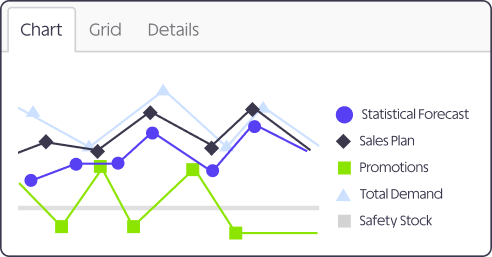
Safety stock vs. cycle stock
To understand safety stock properly, it helps to distinguish it clearly from cycle stock. These two types of inventory serve very different purposes and should not be treated interchangeably.
Cycle stock is the inventory required to meet expected demand during a replenishment cycle. Safety stock, on the other hand, exists purely to manage uncertainty. It is not intended to be consumed under normal conditions.
For example, if you sell 100 units per week and reorder every four weeks, your cycle stock covers the expected 400 units. Safety stock sits on top of that to protect availability if demand spikes or deliveries are delayed.
A deeper explanation of how these concepts fit into broader planning processes can be found in AGR’s guide to inventory planning methods and examples, which explores how safety stock interacts with forecasting, replenishment, and service level decisions.
When safety stock protects a business
Safety stock becomes critical whenever variability enters the system. Most supply chains experience this variability daily, even if it is not always visible at first glance.
Common situations where safety stock plays a protective role include:
- Sudden demand spikes caused by promotions, seasonality, or market shifts
- Supplier lead times that vary from order to order
- Forecast inaccuracies, especially for slow-moving or volatile items
- Transport delays and logistical disruptions
- External shocks such as supplier outages or geopolitical events
Without safety stock, even minor deviations can trigger stockouts, lost sales, and reactive decision-making.
Key benefits of safety stock
Holding safety stock is not about being conservative. It is about deliberately managing risk in a measurable way. When sized correctly, safety stock delivers several operational and commercial benefits.
Prevent stockouts and protect service levels
One of the primary roles of safety stock is to maintain product availability when conditions are less than ideal. By absorbing short-term volatility, safety stock helps businesses meet service level targets consistently.
This is especially important for wholesalers and distributors, where availability directly affects customer trust, repeat business, and contractual commitments.
Reduce operational disruption
Stockouts rarely stay contained. When inventory runs out unexpectedly, teams are forced into reactive mode. This often results in expedited shipping, manual workarounds, supplier escalations, and customer communication overhead.
By reducing the frequency of these exceptions, safety stock allows planning, procurement, and operations teams to focus on structured work rather than constant firefighting.
Improve supply chain reliability
A well-calibrated safety stock strategy adds resilience to the supply chain. Instead of passing variability downstream to customers or upstream to suppliers, uncertainty is absorbed internally in a controlled and predictable way.
Why safety stock is important
Safety stock has implications far beyond day-to-day availability. It influences financial performance, planning accuracy, and how confidently a business can operate under uncertainty.
Ensuring customer satisfaction
Customers rarely care why an item is unavailable. They care that it is unavailable. Safety stock reduces the risk of broken promises, missed delivery dates, and eroded trust.
For businesses tracking service levels, safety stock is one of the most effective levers for balancing availability against cost.
Reducing operational risk
Uncertainty is unavoidable in supply chains. Demand fluctuates, suppliers miss deadlines, and forecasts are never perfect. Safety stock reduces exposure to these risks by providing controlled slack in the system.
Supporting inventory optimisation
When safety stock is calculated using data rather than rules of thumb, it supports inventory optimisation rather than working against it. Instead of blanket buffers, businesses can hold targeted protection based on variability, value, and service level requirements.
This approach aligns closely with modern inventory management software, where safety stock is treated as a dynamic planning input rather than a static number.
How to calculate safety stock
There is no single safety stock formula that works for every business. The right method depends on demand behaviour, lead time reliability, service level targets, and data availability.Common safety stock calculations include:
- Worst-case based formulas
- Probability-based (Z-score) models
- Combined demand and lead time variability
- Academic models (e.g. Heizer & Render)
Basic safety stock formula
The most straightforward method compares worst-case and average conditions:
Safety stock = (Maximum daily usage × Maximum lead time) − (Average daily usage × Average lead time)
This calculation estimates the buffer required to protect against the most extreme observed scenarios.
This method is often used as an entry point, particularly when data is limited or systems are still maturing. It provides a simple way to visualise risk but does not account for probability or service levels.
As a result, it can lead to overly conservative buffers, especially in complex assortments.
Standard deviation or Greasley method
A more structured approach incorporates demand variability and desired service levels:
Safety stock = Z × σ × √LT
Where the Z value represents the target service level, σ reflects demand variability, and LT is average lead time.
This method shifts safety stock from worst-case thinking to probability-based planning. Higher service levels require more safety stock, but the increase is controlled and measurable.
This approach works well when historical demand data is reliable and service level targets are clearly defined.
Variable demand and lead time formulas
In environments where both demand and lead time fluctuate, safety stock calculations need to account for uncertainty on both sides:
Safety stock = Z × √((LT × σd²) + (D² × σLT²))
This formula captures the combined effect of demand volatility and lead time variability. It is particularly useful for global supply chains or supplier networks with inconsistent performance.
Businesses with multiple suppliers, long transport routes, or frequent disruptions often rely on this approach to avoid underestimating risk.
Heizer and Render formula
Another widely used academic model focuses on demand variability during lead time:
Safety stock = Z × σLT
Although simpler in structure, this method still incorporates probability and service level targets. It is conceptually aligned with the variable demand approach but framed around lead time demand rather than daily demand.
Choosing the right safety stock formula
No single formula is universally correct. The most effective safety stock strategies use different methods for different item groups.
The choice of formula should be guided by factors such as data quality, demand patterns, supplier reliability, and the business impact of stockouts. High-value or critical items often justify more advanced modelling, while low-impact items can be managed with simpler rules.
Many businesses align safety stock calculations with ABC classification, ensuring analytical effort is focused where it delivers the most value.
Safety stock in inventory control systems
Manual safety stock calculations do not scale. As assortments grow and conditions change, static buffers quickly become outdated. Modern inventory control systems calculate safety stock dynamically using real-time data and performance signals.
ERP and inventory management software
Advanced inventory management software uses historical demand, forecast accuracy, lead time performance, and service level targets to continuously update safety stock levels.
This approach replaces static buffers with item- and location-specific protection that evolves as conditions change. AGR’s inventory management software is designed to support this kind of data-driven safety stock modelling across complex assortments and multi-location networks.
AI and automated optimisation
AI-driven inventory optimisation goes further by identifying patterns that traditional models miss. These systems detect shifts in demand behaviour, supplier performance, and forecast accuracy early, allowing safety stock to be adjusted proactively.
Instead of hiding problems, AI-based approaches help surface root causes, such as unreliable suppliers or unstable demand, while still protecting service levels.
Common safety stock challenges and best practices
Even well-intentioned safety stock strategies can fail if they are not managed systematically. The most common issues tend to fall into a small number of recurring patterns, each with clear corrective actions. The table below summarises these challenges and the corresponding best practices.
| Challenge | Why it happens | Best practice |
| Holding too much safety stock | Buffers are set using rules of thumb or worst-case assumptions rather than data, often to compensate for uncertainty or lack of trust in forecasts | Size safety stock using variability and service level targets so protection is proportional to actual risk |
| Holding too little safety stock | Pressure to reduce inventory or improve cash flow leads to aggressive cuts without accounting for demand and lead time variability | Align safety stock levels with agreed service levels and business risk tolerance |
| Safety stock not reviewed regularly | Buffers are treated as static values and not revisited as demand patterns, suppliers, or markets change | Review and adjust safety stock whenever forecasts, lead times, or service level targets change |
| Safety stock disconnected from service levels | Inventory buffers are set without clear availability targets, making them hard to justify or optimise | Always link safety stock calculations directly to explicit service level goals |
| One-size-fits-all approach | All items are treated equally regardless of value, demand behaviour, or criticality | Segment inventory using methods such as ABC analysis and apply more advanced models where impact is highest |
Used consistently, these best practices help ensure safety stock remains a deliberate planning tool rather than an unmanaged buffer that grows over time.
Frequently asked questions about safety stock
What is the 50 percent rule of safety stock?
The 50 percent rule suggests holding safety stock equal to 50 percent of average demand during lead time. It is a rough heuristic and should only be used when no historical data is available.
What is safety stock in EOQ?
In EOQ models, safety stock is added on top of cycle stock to protect against variability. EOQ determines order size, while safety stock protects availability.
How do I calculate safety stock accurately?
Accurate safety stock calculation requires reliable demand data, realistic lead time assumptions, and defined service level targets. Statistical methods generally outperform simple rules of thumb.
What happens if I set safety stock to zero?
With zero safety stock, any deviation in demand or supply results in immediate stockouts. This may work in highly stable environments but rarely holds in real-world supply chains.
How do you calculate the Z-score of safety stock?
The Z-score corresponds to the desired service level. For example, a 95 percent service level typically uses a Z-score of around 1.65.
What is a good safety stock level?
There is no universal answer. A good safety stock level balances service targets, cost constraints, and risk tolerance. The right level varies by item, location, and business model.