


Efficient inventory management depends on how well businesses handle stock movement and valuation. One of the most common and effective methods is FIFO – First In, First Out. This approach ensures older stock is sold or used before newer items, reducing waste and improving accuracy in both accounting and operations.
In this article, we explain what the FIFO meaning, how it works, its advantages, its financial implications, and how to determine if it is the right choice for your business.
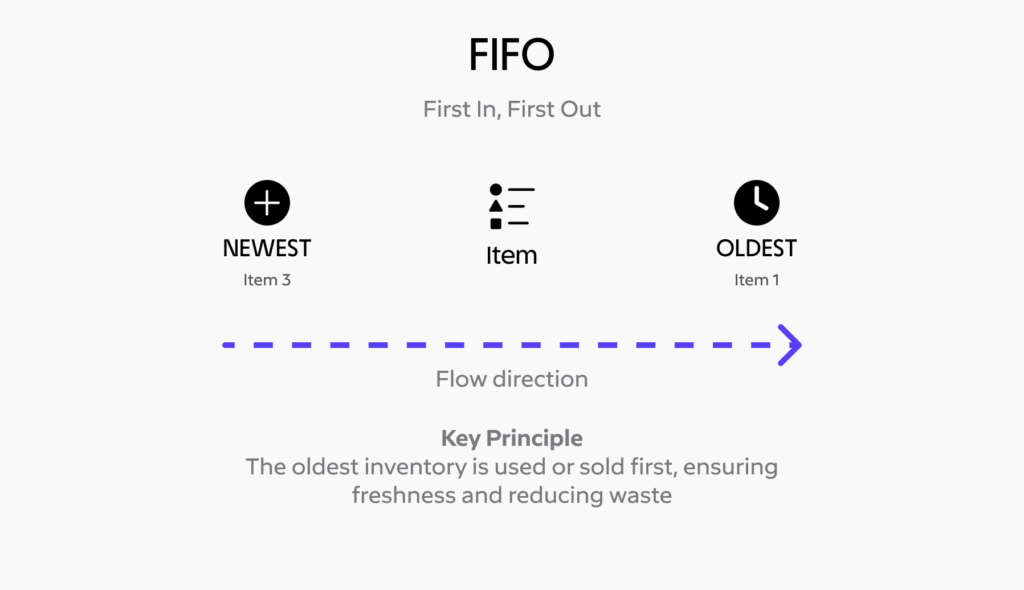
How the FIFO method works
FIFO stands for First In, First Out, a simple yet powerful principle that ensures the oldest inventory is used or sold first. It is one of the most common methods used in inventory management and accounting because it reflects how stock typically moves in the real world.
As J&J Global Fulfilment explains, the FIFO method helps maintain stock freshness and ensures goods do not sit idle on shelves. Older batches are cleared before new ones, making it especially effective for products with expiry dates or limited shelf life.
In practice, FIFO means that the first goods received are the first to leave inventory. Imagine a supermarket restocking milk; the oldest bottles are placed at the front so they are sold first, keeping stock rotation efficient and reducing waste.
From an accounting perspective, FIFO assumes that older costs are recorded first when calculating the Cost of Goods Sold (COGS). During inflation, this typically results in lower COGS and higher gross profit because older, cheaper stock values are used before newer, more expensive ones.
By following FIFO, businesses can keep inventory moving smoothly, reduce write-offs, and maintain accurate financial reporting that supports a well-optimised supply chain.
FIFO in inventory management
FIFO is not just a financial concept; it is a practical operational tool. It helps ensure that stock moves smoothly and consistently, preventing items from becoming obsolete or expiring.
Key benefits for inventory management
- Maintains product freshness – particularly critical in food, pharmaceuticals, and fast-moving consumer goods.
- Reduces waste and shrinkage – older stock is sold first, reducing the risk of expiry or obsolescence.
- Supports accurate forecasting – better visibility into which products move fastest helps refine demand planning.
- Improves traceability – businesses can track batches efficiently, which is essential for recalls or audits.
Whether it is physical products or raw materials, FIFO keeps operations aligned with the natural flow of goods, ensuring a consistent turnover rate and healthier inventory balance.
FIFO vs LIFO and other valuation methods
While FIFO is widely used, it is not the only way to value or manage inventory. Understanding the alternatives helps businesses choose the right system for their needs.
| Method | Definition | Best for | Key drawback |
| FIFO (First In, First Out) | Oldest items sold first | Fast-moving goods, perishable stock | May inflate profit margins during rising prices |
| LIFO (Last In, First Out) | Newest items sold first | Industries with non-perishable, bulk goods | Often not permitted under IFRS standards |
| FEFO (First Expired, First Out) | Items closest to expiry are sold first, regardless of arrival date | Pharmaceuticals, food, and other perishable goods | Requires precise tracking of expiry data |
| Weighted Average Cost | Average cost of all inventory used | Businesses with indistinguishable stock (for example, liquids, grains) | Less precise reflection of real stock movement |
| Specific Identification | Tracks the exact cost of each item | High-value, unique goods (for example, jewellery, vehicles) | Complex to manage at scale |
Both FIFO and FEFO aim to maintain product freshness and reduce waste. The difference lies in their focus. FIFO prioritises order of arrival, while FEFO prioritises expiration date, which can be critical in highly regulated industries such as pharmaceuticals or food distribution.
In most industries, especially retail and distribution, FIFO aligns best with real-world operations.
FIFO’s impact on financial performance
FIFO does not just affect warehouse efficiency; it also plays a major role in financial reporting and profitability. The method you choose to value inventory directly influences your balance sheet, profit margins, and tax liability.
According to the Corporate Finance Institute, FIFO typically produces higher net income during inflationary periods. That is because older, cheaper inventory is recognised as the cost of goods sold first, while newer, more expensive stock remains on the balance sheet. This leads to:
- Lower COGS (Cost of Goods Sold) because the earlier, lower-cost items are recorded first.
- Higher gross profit and taxable income as a result of the lower COGS.
- More accurate asset valuation since ending inventory reflects the most recent purchase prices.
For example, if the price of raw materials rises over time, using FIFO means your books will show higher profits than if you used LIFO. This gives investors and stakeholders a more optimistic view of business performance but also means higher tax obligations.
On the other hand, in periods of price decline or deflation, FIFO may reduce profitability on paper since higher-cost items are sold first. The key takeaway: FIFO smooths financial results and provides transparency, but companies must balance its tax impact against operational benefits.
Advantages and disadvantages of FIFO
FIFO offers several operational and financial benefits, but it is not without drawbacks. Understanding both sides helps you decide whether it suits your inventory and accounting strategy. You can find more examples of these in Investopedia’s overview of FIFO advantages and disadvantages.
Advantages
- Transparent and logical – FIFO mirrors how most businesses naturally move stock, making it intuitive for teams to follow and auditors to verify.
- Accurate asset valuation – because the oldest stock costs are used first, the remaining inventory is valued closer to current market prices, improving balance sheet accuracy.
- Simpler accounting and reporting – it is easier to calculate cost of goods sold and profits, with fewer discrepancies between book and physical inventory.
- Better cash flow visibility – predictable COGS and sales patterns make financial forecasting more stable.
- Lower waste and obsolescence – selling older products first keeps stock fresh, which is particularly valuable in industries like food, fashion, and pharmaceuticals.
Disadvantages
- Higher taxable income in inflationary periods – older, cheaper stock is recognised first, resulting in higher profit margins and therefore higher tax liabilities.
- Less accurate reflection of current costs – when prices fluctuate sharply, reported profits may not reflect the actual replacement cost of inventory.
- Not ideal for certain industries – sectors with volatile input costs, such as manufacturing or construction, may find alternative methods (like weighted average cost) more precise.
- Potential complexity with multiple warehouses – ensuring that FIFO is applied consistently across locations requires robust tracking and automation.
Is FIFO the right method for your business?
FIFO is one of the most widely used inventory valuation methods, and for good reason. It aligns naturally with how most businesses operate, ensuring that older stock moves first and product quality stays high. According to Investopedia’s overview of FIFO, this method is particularly effective for businesses where goods have a short shelf life or are sensitive to obsolescence, such as food, fashion, or consumer electronics.
Because FIFO bases the cost of goods sold on older, often cheaper inventory, it can also lead to higher reported profits during periods of inflation. This might look good on paper but can mean higher taxable income, which is important to consider during financial planning. On the other hand, it provides a truer reflection of current market value on the balance sheet, helping demonstrate healthy asset value to investors or lenders.
When FIFO makes sense
- Your products are perishable or time-sensitive.
- You prioritise stock freshness and rotation.
- You want a clear and transparent link between inventory flow and accounting.
- Your prices remain relatively stable over time.
When to consider alternatives
If your business operates in a sector where input prices fluctuate sharply, such as construction, metals, or manufacturing, other valuation methods like LIFO (Last In, First Out) or the Weighted Average Cost method may offer a more realistic picture of current expenses.
How AGR helps businesses act on FIFO insights
While AGR does not calculate FIFO directly, it enables you to measure, analyse, and optimise stock movement in line with FIFO principles. Through the Performance Board, you get a real-time overview of inventory performance across all locations, including turnover rates, service levels, and order value trends.
These insights help you:
- Spot slow-moving or at-risk items before they become obsolete.
- Understand how well stock is rotating across categories and warehouses.
- Visualise the financial impact of excess or ageing inventory.
- Support data-driven decisions that reduce waste and improve profitability.
By combining visibility with automation, AGR gives teams the confidence to make smarter replenishment and purchasing decisions that naturally reinforce FIFO best practices. This ensures products move efficiently, margins stay healthy, and cash is not tied up unnecessarily.
FAQs about FIFO
What does FIFO stand for?
FIFO stands for First In, First Out, meaning the oldest stock is used or sold first.
How is FIFO different from LIFO?
FIFO sells older inventory first, while LIFO sells the newest. FIFO generally results in higher inventory values and lower COGS in periods of inflation.
Why is FIFO preferred in inventory management?
It keeps products fresh, reduces waste, and provides a more realistic view of inventory flow.
Can FIFO be used with modern inventory systems?
Yes. Systems like AGR provide visibility and insights that make it easier to apply FIFO principles consistently across operations.
Related resources