


When products sit in storage long after they’ve lost their market value or usefulness, they become obsolete stock. This is a challenge for wholesalers, distributors, and retailers alike, tying up capital, taking up space, and eroding margins. But with the right strategies, obsolete stock can be minimised, managed, and in some cases even prevented.
What is obsolete stock?
Understanding the definition of obsolete stock is the first step to knowing how to address it.
Obsolete stock (also called obsolete inventory) refers to items that a business can no longer sell at full value because they are outdated, no longer in demand, or beyond their shelf life. Unlike slow-moving goods, obsolete stock has little to no realistic chance of being sold without heavy discounting or disposal.
Examples of obsolete stock can vary across industries:
- Technology: outdated smartphones, accessories, or computer components replaced by newer models.
- Fashion and retail: last season’s clothing lines or discontinued styles no longer in demand.
- Automotive: spare parts for vehicles that are no longer manufactured.
- Healthcare and pharmaceuticals: medical supplies or drugs that have expired or been replaced by updated versions.
- Food and beverage: products that have passed their best-before or use-by dates.
- Manufacturing: components tied to discontinued product lines or obsolete machinery.
Difference between obsolete stock and dead stock
It’s important to distinguish between dead stock and obsolete stock to avoid confusion.
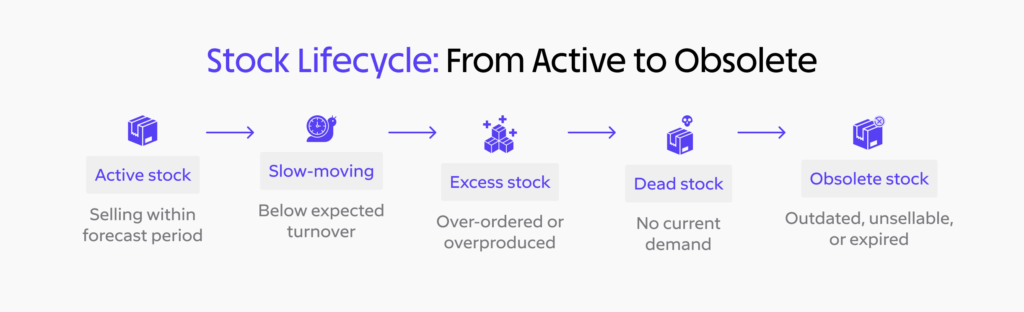
Although they are often confused, obsolete stock is actually a subcategory of dead stock. Dead stock is a broader term that covers any unsold inventory with no demand. Obsolete stock, on the other hand, refers specifically to items that have lost their value or relevance because they are outdated, superseded by newer models, or have expired.
The key difference is usability: while both are unsellable at full value, obsolete stock implies the product is no longer usable, fashionable, or functional. Dead stock can also include items that were over-ordered, out-of-season, or poorly promoted but might still hold some demand in the right circumstances. For more detail, see our article on what is deadstock.
Causes of obsolete inventory
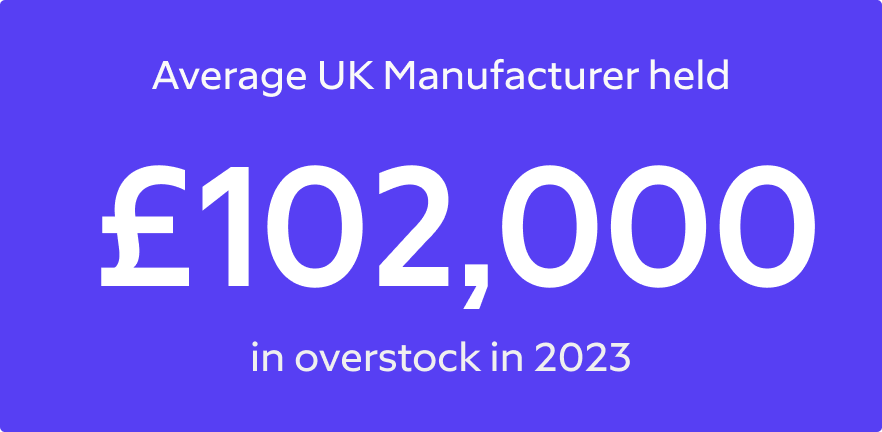
Overstock often turns into obsolete stock when demand slows down and excess inventory sits unused. According to a recent report from the International Accounting Bulletin, UK manufacturers held overstocked goods worth an average of £102,000 in 2023, underscoring how easily surplus stock can become unsellable over time. Understanding the underlying causes of this problem is essential to prevent valuable goods from becoming financial liabilities.
Technological innovation and product lifecycle
In fast-moving industries, products quickly lose relevance as new models launch. Electronics, fashion, and seasonal goods are particularly prone to rapid obsolescence. Businesses need tools that can anticipate lifecycle shifts and align stock accordingly. AGR’s demand planning and forecasting capabilities help companies predict when products are nearing end-of-life and adjust orders before excess stock turns obsolete.
Inaccurate demand forecasting
Forecasting errors often play a major role in creating obsolete stock.
Poor forecasting creates a mismatch between supply and actual customer demand. When businesses overestimate demand, stock piles up and eventually becomes obsolete. Improving forecasting practices is key to prevention—our guide on demand planning explores how structured planning and better data can reduce this risk.
Market and customer preference changes
Consumer tastes and market conditions can shift quickly. Shifts in consumer behaviour—whether due to trends, regulations, or economic conditions—can leave products unwanted. What was once a best-seller can become unsellable almost overnight.
Overproduction and safety stock issues
Excessive production and poorly managed safety stock often cause unnecessary surpluses.
Carrying excessive safety stock or producing more than necessary leads to surplus inventory. If that surplus can’t be shifted in time, it turns obsolete. Businesses often struggle to balance safety stock correctly, too little risks stockouts, while too much risks obsolescence. Our article on safety stock explains how to calculate and manage safety stock effectively to strike the right balance.
Consequences of obsolete stock
Recognising the consequences of obsolete inventory highlights why proactive management is critical.
Financial impact
Obsolete stock results in direct write-offs and wasted working capital. These sunk costs reduce profitability and limit funds available for future investment.
Operational inefficiencies
Warehouse staff spend time managing and moving items that will never be sold. This creates inefficiencies across supply chain processes.
Lost storage capacity and increased holding costs
Storing obsolete goods consumes valuable warehouse space and adds unnecessary costs for handling, insurance, and utilities.
Environmental and sustainability challenges
Discarding unsellable goods adds to landfill waste and undermines sustainability efforts. Businesses must also account for reputational risk if disposal practices are poorly managed.
How to identify obsolete stock
Before stock becomes a liability, businesses need reliable ways to identify it.
Inventory turnover analysis
Tracking turnover ratios reveals items that are not moving as expected. Low turnover can be an early sign of potential obsolescence. For a deeper dive into how turnover works, see our guide on inventory turnover ratio, which explains the formulas, calculations, and benchmarks across industries.
Monitoring demand signals
Analysing sales and demand trends is another way to spot risk early.
Keeping a close eye on sales patterns, customer feedback, and market data helps businesses detect declining interest before stock becomes unsellable. Leveraging modern forecasting methods is essential—our demand forecasting guide outlines practical steps and tools to monitor demand signals more accurately.
How to prevent obsolete stock
Prevention is always more effective than dealing with obsolescence after the fact.
Improve demand forecasting accuracy
More accurate forecasting reduces risk and improves inventory balance.
Using advanced forecasting tools reduces the risk of overestimating demand and keeps stock levels aligned with reality. Our demand forecasting guide explains methods, formulas, and best practices that help businesses improve accuracy and avoid the build-up of obsolete stock.
Implement real-time inventory visibility
Real-time visibility allows businesses to make proactive adjustments. Having a single source of truth across locations makes it easier to spot imbalances and respond quickly. Our article on the power of a single source of truth in inventory management explains how centralised data and visibility help reduce risk and prevent obsolete stock.
When businesses can see stock movement across multiple locations, they can rebalance before goods lose value.
Use S&OP and integrated planning
Aligning sales and operations prevents costly mismatches. Integrated planning creates collaboration between teams and ensures inventory decisions are based on accurate data. Our article on the power of a single source of truth in inventory management highlights how this approach improves alignment and reduces the chance of stockpile build-up.
Sales and operations planning ensures all departments align on demand expectations, reducing the chance of stockpile build-up.
Regular inventory audits and rationalisation
Regular audits keep businesses ahead of potential inventory issues. Conducting systematic reviews ensures that slow-moving or stagnant items are spotted early and addressed before they become obsolete. Our inventory management guide explains how regular auditing and rationalisation practices strengthen overall inventory control and support better decision-making.
Frequent reviews of inventory highlight products that are stagnating. Proactive decisions—such as promotions or bundling—can help clear them before they become obsolete.
How AGR helps manage obsolete stock
AGR provides tools and strategies designed to reduce the risk of stock obsolescence. AGR’s inventory optimisation tools help businesses detect risk early. With accurate demand forecasting, automated replenishment, and real-time visibility, companies reduce excess stock and prevent obsolescence before it drains resources. AGR ensures capital is invested in products that customers actually want, freeing up storage space and protecting profitability.
A great example is PanzerGlass, a company that provides protective covers for mobile phones, a market that evolves rapidly with every new device release. By using AGR’s system to forecast demand and plan replenishment, they keep inventory perfectly aligned with the latest phone models, ensuring relevance while avoiding the cost of holding outdated products.
FAQs on obsolete stock
Answers to common questions help clarify the subject and give quick takeaways.
What’s the difference between excess stock and obsolete stock?
Excess stock refers to surplus items that may still sell eventually, while obsolete stock has little or no chance of being sold.
What causes obsolete inventory?
Common causes include poor forecasting, overproduction, market changes, and short product lifecycles.
How long before stock is considered obsolete?
It varies by industry. Fashion or tech items may become obsolete within months, while industrial goods may take years.
Is writing off obsolete inventory tax-deductible?
In most cases, yes. Businesses can often write off obsolete stock as a loss, but tax rules differ by region.
Can obsolete stock be resold or reused?
Sometimes. Options include discounting, repurposing, recycling, or donating unsellable stock.
Related resources
Explore further resources to strengthen your inventory management strategy.